
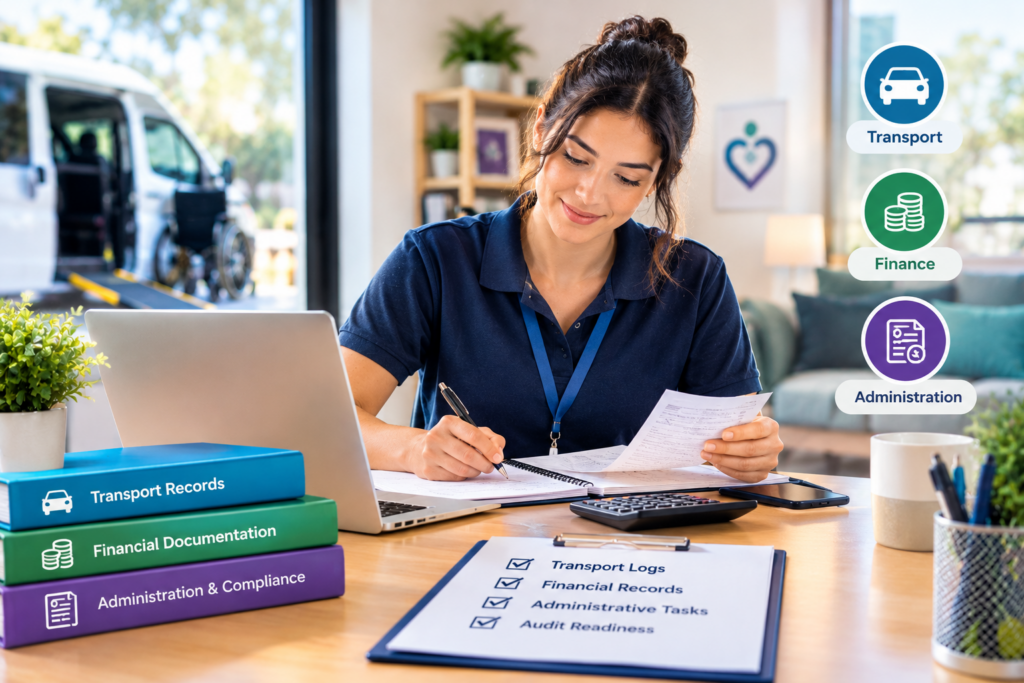
SIL Documentation Training: Transport, Finance and Administration Essentials for NDIS Providers
Accurate documentation is essential for managing Supported Independent Living (SIL) services effectively. From recording participant transport to tracking expenses and maintaining administrative records, every detail contributes to transparency, accountability and the smooth operation of a shared living environment. For disability support workers, SIL team leaders, service coordinators and NDIS providers, maintaining consistent records can be challenging without clear systems and procedures. The SIL Documentation Essentials (Education Pack) – Part 5: Transport, Finance & Admin from eMasterHUB focuses on the practical administrative tasks involved in documenting transport activities and participant-related finances. Why Is SIL Documentation Important for NDIS Providers? Supported Independent Living involves coordinating daily support arrangements, household activities and individual participant needs. Reliable documentation helps teams maintain consistent records, communicate important information and understand how resources are being used. Well-organised records can also help organisations respond to internal reviews, enquiries and applicable compliance requirements. Key areas of SIL documentation include: A structured approach helps reduce confusion, improve record consistency and make important information easier to retrieve when required. Transport Documentation in Supported Independent Living Transport is an important part of many SIL arrangements. Participants may require assistance travelling to appointments, community activities and other destinations in accordance with their individual support arrangements. When transport is provided, recording relevant journey details helps establish a clear record of activities and associated costs. What Should SIL Transport Records Include? The information recorded should reflect the organisation’s procedures, the nature of the journey and applicable documentation requirements. Depending on the circumstances, transport records may include: Consistent recording practices can help teams identify missing information and maintain clearer transport logs. The eMasterHUB course focuses on customising logging systems for transport, with particular attention to documenting every kilometre driven on behalf of a participant. Financial Documentation for SIL Services Managing participant-related finances requires careful attention to recordkeeping. Support teams may need to document expenses, retain supporting information and follow established procedures for handling money on behalf of participants. Clear financial records help demonstrate how funds have been managed and provide a reference when transactions need to be reviewed. Best Practices for SIL Financial Recordkeeping A consistent financial documentation process should consider: Accurate transaction records: Record relevant amounts, dates and transaction details promptly. Supporting evidence: Retain receipts, invoices or other appropriate evidence according to organisational procedures. Clear authorisation: Follow applicable requirements for approvals and financial decisions. Consistent logging systems: Use established formats so information can be recorded and retrieved consistently. Transparent administration: Ensure records clearly explain the transaction and its relevance to the participant or household. These practices support accountability and help organisations prepare for appropriate financial reviews. SIL Administration and Audit-Ready Documentation Administrative records connect the different activities involved in managing a SIL household. When transport logs, expense records and other documentation are maintained consistently, teams can access information more efficiently and identify gaps before they become larger problems. Audit readiness should be approached as an ongoing practice rather than a last-minute task. Records should be accurate, appropriately maintained and consistent with applicable requirements and organisational policies. How to Improve SIL Documentation Systems Organisations can strengthen their recordkeeping processes by establishing clear procedures and ensuring staff understand their responsibilities. Useful steps include: The objective is to establish documentation practices that are practical for staff while supporting transparency and accountability. Who Should Take SIL Documentation Training? Training in SIL documentation can be relevant to professionals involved in disability support operations and administration, including: The course is particularly relevant to people who want to strengthen their understanding of transport logs, participant-related financial records and administrative documentation. SIL Documentation Essentials Course by eMasterHUB The SIL Documentation Essentials (Education Pack) – Part 5: Transport, Finance & Admin provides focused education on the administrative responsibilities associated with SIL household operations. The course emphasises customising logging systems for transport and personal finances, with the aim of documenting kilometres travelled and money spent on behalf of participants. Course details: Its flexible online format allows learners to study at a convenient time and revisit the material as needed. Strengthen Your SIL Documentation Skills With eMasterHUB Consistent transport records, accurate financial logs and organised administrative systems are important elements of effective Supported Independent Living operations. Developing these skills can help disability support professionals approach their responsibilities with greater clarity and confidence. The eMasterHUB SIL Documentation Essentials – Part 5 course offers a focused learning opportunity for professionals who want to improve their understanding of transport, finance and administration in SIL settings. Enrol in the SIL Documentation Essentials course at eMasterHUB for A$20 and build practical knowledge of transport logging, participant-related financial records and SIL administration. Visit https://emasterhub.com.au/ to explore the course and start learning online.